Wednesday, 23 January 2013

Small talk, big arguments

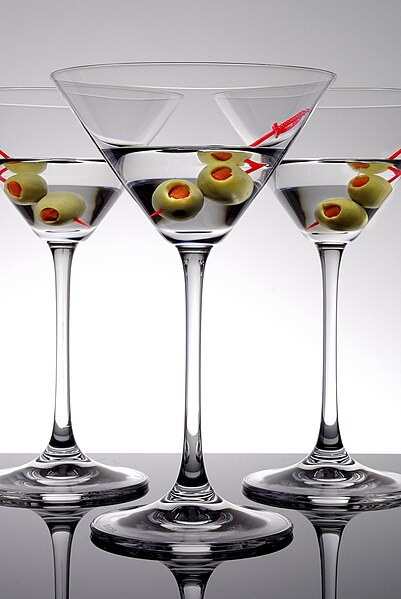
Why don't you try with some olive facts, next time you sit with an acquaintance of yours, sipping a martini, and looking at that olive floating around, thinking about starting a weather conversation?


Like:

-  that olive oil is the only oil obtained from a fruit?

- that it is the only oil that can be obtained just by pressing the fruits, without need for any refinining?

- that its trade was regulated at least since Babylonian times, i.e. 5000 years ago (Hammurabi's Code bearing the first references)?

I have many more, if we ever meet for a martini, I'll share them in person...

P.S. Speaking of martinis, drink responsibly! (Sorry J, I'll make it up to you next time)

Thursday, 20 December 2012

Take your olive oil to dinner this Christmas!

On an appetizer...


On a main...


Or on a dessert, why not?


Happy Christmas!

Saturday, 8 December 2012

White olives?

Everybody heard about green and black olives, but what about the white ones?

Due to the content of my last post I can not honestly say that what I saw this morning surprised me, but it's still an unusual view:


Well, Insha'Allah, hopefully there wont be too many broken/frozen branches. Will take a walk tomorrow and see.


Thursday, 6 December 2012

Weather forecasts...

If you live in a city and it's not a weekend, the weather has not a huge influence on your life. Of course, extreme events apart like floods, snowstorms or similar. But if you are on sea, be it leisurely sailing with your family and friends or shipping several thousands tonnes of crude or iron ore, it's another matter altogether.

Hokusai's take on rough weather
 Having a bit of sea experience myself, I have learned to keep a careful eye on the weather patterns and developements, so to plan and organize the life at sea in accordance with nature swinging moods.

A nice high pressure area and you can have a good quiet sleep at anchor!

But how does this translate to works in olive orchards? Here is a fresh example that is puzzling me at this very moment.

There's an approaching low pressure peeking which will most probably lead to rain and temperature drop over the weekend. Now, the temperature drop does not worry us if it is keeping itself at or about 0 degrees celsius, but it may be troublesome for the young olives if much lower, as the branches are still growing. The possible damage we are looking at is freezing of the branches - at least one year of growth lost - or even whole trees freezing and dying. There are biological solutions that can be sprayed on the leaves to prepare them for the shock and minimize the damage, but as with all biological therapies the timing is paramount.

 Google being our friend, a quick look at some serious weather forecast pages gave the following results:

FORECAST 1

FORECAST 2

FORECAST 3


As you can see, it is not even clear if it wil rain (or snow) Friday OR Saturday (we really can't spray anything whilst it rains...), let alone IF the temperature drop will be under 0, and if so when...

If only the Oracle of Delphi was still in business!


Monday, 3 December 2012

Oil trading, arbitrage and options...in ancient Greece

Here is a little piece of useless olive oil related info useable during a rainy day winter chat. Having a penchant for economics myself, lately I stumbled into an article about economy theories. There was a reference to Thales of Miletus - if at school you listened to your math teacher, this was the guy who measured the pyramids height with a stick on a sunny day. A practical, clever person one would imagine.


In this days of general malcontent with anything related to the financial world and their instruments, it is interesting to observe that similar techniques were employed in the early days of our civilization. As a necessary intro, it is worth mentioning that at the time olive oil had the same (if not larger) economic importance that crude oil has now for our society.

Thales, the story goes, predicted a generous olive harvest for the next season and negotiated a deal with the region's mills whereas he'd have a right to use the mills for a fixed sum. Harvest time come, Thales excercised his option and, if we trust the old story, made himself quite a fortune on the delta.

I bet his philosophy classes had a surge in attendances when the news spread out...

Thursday, 22 November 2012

Mars attacks! Earth fights back...

We've been pondering a plethora of options on how to minimize the damage caused by this family of insects.

A quite broad description of the damage, the menace and the palliative measures has already been given on this blog here, but for those who would like a quick reminder, the damage looks like this:

Otiorhynchus damage


Whilst the perpetrator has more or less (there are several types of them wandering around our orchards) this look:
The menace!


So, we ended with about one thousand trees with developement issues, and several tens dead . And obviously, hours and hours spent minimizing the damage. Whilst some plant infusions did have a repelling effect, those insects are active for several months and it simply was not possible to keep up with their innumerable forces on the field.

Finally, one option has been agreed as the (potentially) most effective whilst at the same time not disruptive or distructive for the orchard biodiversity,  not invasive,  not polluting, and not changing the soil chemistry. Too good to be true? I certainly hope not.

So what is this option on which we pose so much hope? Big roll of drums, it's a half millimetre worm. It's a member of the Nematodes gang: a brief and techy explanation here, and a more detailed and easy to understand here. To cut a long story short, those little guys search for the larvae of specific insects and parassite on them, thus eliminating the threat to our trees. Obviosly not all is that easy: we had to nail a narrow window of soil temperature, humidity, spray them fast as they do not swim that well, water the plants right away to push the nematodes underground... Here some pics of how it all looked:

Here are the little soldiers, kept at +8 degrees C

Now going for a swim
Stirred, not shaken...

Sprayed around the young trees...

Quickly watered in order for them to get underground...
A quick pitstop to load some more water...
On again...

Till the end of the day
And a nice sunset...

Now we have just to wait for spring and see if the nematodes worked their magic on the larvae of the leaves eating menaces! Fingers crossed...