Been missing us? Sorry but at the moment we're in "all hands on deck mode" as it's pruning season! Take a look at the short video we made (actually worth one hour of pruning) to get an idea of how's life in Cadenela orchards right now...
Pruning is probably the most labour intensive activity (or at least on harvest level) and is necessary to have a healthy and productive orchard. Oh, and the trees look better after a haircut too :-)
Showing posts with label organic farming. Show all posts
Showing posts with label organic farming. Show all posts
Saturday, 11 April 2015


Thursday, 29 January 2015
Art, kids & Cadenela olive oil
One may find the combination of art and agriculture somewhat strange, but food has always found its place in art, either on canvas or in other unedible forms. Remember highschool art lessons, and renaissance's Giuseppe Arcimboldo?
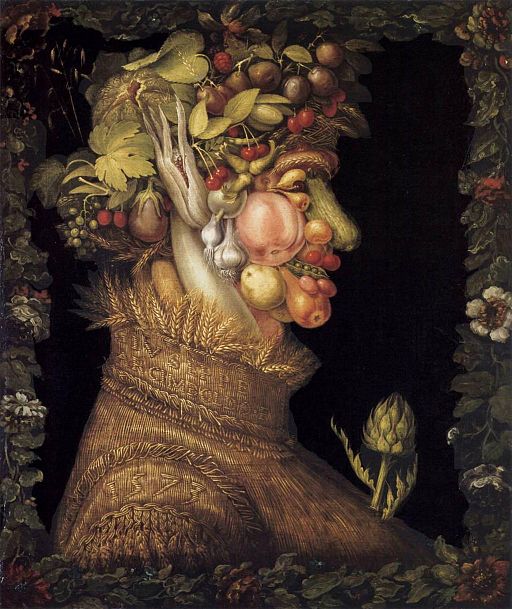
There are many more, both contemporary and distant in time that have found inspiration in food, one way or the other. Now, you may wonder why this introduction in our, mostly down-to-earth (quite literally) blog: because the olive tree, and its oil, inspires us. It takes one back to basic beauty, to natural harmony, to higher connections the olive oil has always bridged for humans.
Enter Valter Černeka and his art. Primarily a sculptor, but otherwise an artist tout court, Valter pursues an impressive range of activities, not last working with children and developing the innate creativity of our younger ones. Since we both share a penchant for the olive tree, it came quite natural to embark on a project we are now proud to present you: the Cadenela organic olive oil, especially for our kids.
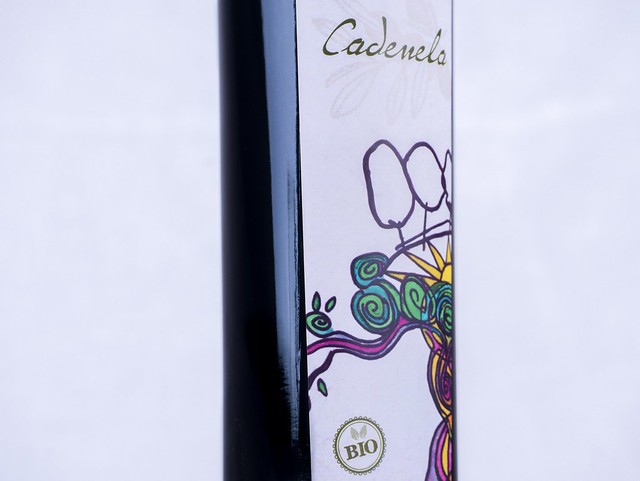
For kids you may ask? Yes, since the quest for high quality olive oil often leaves the youngest a bit wanting, due to the bitterness and spicy tastes we tend to associate with such products. Obviously with time kids begin to appreciate those qualities, but why not produce a top olive oil, just milder, and present it properly to them? That was the idea we developed and which has been visually translated, with the invaluable input and start idea by our 5 year old daughter Elena :-).
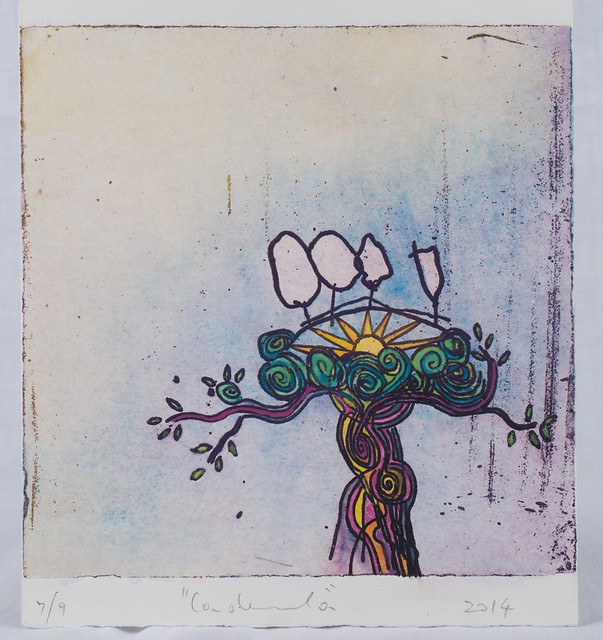
A limited batch of 100 bottles has been made this year, so hurry up and check here whether you can still grab one for your little ones!
Here's a slideshow of some details of Valter's and our work:

Enter Valter Černeka and his art. Primarily a sculptor, but otherwise an artist tout court, Valter pursues an impressive range of activities, not last working with children and developing the innate creativity of our younger ones. Since we both share a penchant for the olive tree, it came quite natural to embark on a project we are now proud to present you: the Cadenela organic olive oil, especially for our kids.
For kids you may ask? Yes, since the quest for high quality olive oil often leaves the youngest a bit wanting, due to the bitterness and spicy tastes we tend to associate with such products. Obviously with time kids begin to appreciate those qualities, but why not produce a top olive oil, just milder, and present it properly to them? That was the idea we developed and which has been visually translated, with the invaluable input and start idea by our 5 year old daughter Elena :-).
A limited batch of 100 bottles has been made this year, so hurry up and check here whether you can still grab one for your little ones!
Here's a slideshow of some details of Valter's and our work:
Wednesday, 16 April 2014
Pedal to the metal!
I think this was the longest absence of updates on this blog since it's inception - nature's decision to provide us with a rainy winter and a sudden start of spring, I'm talking to you...
Well, it's quite a busy period for us, having the backlog of late winter work to be cleared off the list (now done!) and all the usual spring duties compressed in half the usual time. We're keeping up, thanks for asking, and soon the tempo should be easier on us, and allow for some more regular reporting!
For those who may wonder what kept yours truly occupied, here's a little video (it's an hour of work compressed in few seconds)
To get a feel of the size of activities, just press play a few hundred times :-)
Wednesday, 22 January 2014
Gold for Cadenela, or otherwise said - ladies and gentlemen, start your engines!
I thought about grouping all the results on various competitions in one single post, but my ego is recalcitrant to keep silent and quiet, hence - we've already won a gold medal, and got again listed in Monocultivar olive oil guide by Mr.Celletti!
Ok, for now this is it but we have more coming in the spring (of course I will not manage to keep quiet and let you know in no time).
Before I leave you, here's a screenshot of the chemical analysis of this year's oil - quite good given the annus horribilis we've endured.

All this is good and nice, you may say, but how does it taste? In comparison with the muted tastes of many Istrian oils of this 2013 harvest, the pungency is quite present, with low levels of bitterness, and mild grassy/fruity aromas. But forget words, come and try it by yourself!
Ok, for now this is it but we have more coming in the spring (of course I will not manage to keep quiet and let you know in no time).
Before I leave you, here's a screenshot of the chemical analysis of this year's oil - quite good given the annus horribilis we've endured.
All this is good and nice, you may say, but how does it taste? In comparison with the muted tastes of many Istrian oils of this 2013 harvest, the pungency is quite present, with low levels of bitterness, and mild grassy/fruity aromas. But forget words, come and try it by yourself!
Thursday, 18 July 2013
The needle and the damage done
This little insect is becoming the main summer blues down here in Istria, and more often than not in the last days, Neil Young's song from which I shamelessly stolen the title for this post, is coming to my mind. The little bug is piercing a huge number of small olives, and as the situation is standing at the moment we are looking at a 50%+ loss of harvest.
Not a good outlook, especially as the instruments available to limit the damage are almost non-existent. But, as in any other field, any event brings lessons to be learned and has some positive, although minor, sides.
Some of the olives managed to survive, and are becoming "too big to fail" as the pierces now are just becoming an aesthetic issue, rather than life-or-death.
On another side, we came to know and understand this problem before full production and whilst the majority of trees are still very young, which will lead to proper preparation for next year and to a bigger growth of the trees this year, since they do not have to feed all those olives (hopefully meaning more olives next year!).
And all that happening before the olive fly even beginning its offensive...Which may give you an idea why organic is sometimes more expensive than "normally" grown food!
Still, working hard as there's less than 100 days to harvest. Looking forward to the dawn of that day!
 |
| A fistful of damage |
Not a good outlook, especially as the instruments available to limit the damage are almost non-existent. But, as in any other field, any event brings lessons to be learned and has some positive, although minor, sides.
 |
| Something is still hanging on! |
Some of the olives managed to survive, and are becoming "too big to fail" as the pierces now are just becoming an aesthetic issue, rather than life-or-death.
 |
| Another one (or two) bites the dust |
On another side, we came to know and understand this problem before full production and whilst the majority of trees are still very young, which will lead to proper preparation for next year and to a bigger growth of the trees this year, since they do not have to feed all those olives (hopefully meaning more olives next year!).
 |
| Bue sky within |
And all that happening before the olive fly even beginning its offensive...Which may give you an idea why organic is sometimes more expensive than "normally" grown food!
Still, working hard as there's less than 100 days to harvest. Looking forward to the dawn of that day!
Tuesday, 2 July 2013
Olive fruits - the missing, the missed, and the survivors (an early overview)
It's still quite early for a proper assessment of where this year will bring us, but few weeks after the flowers left place for the olive fruits we can give you some bits and pieces about where we're standing - we'll still have to wait for the end of the summer for any conclusions!
The leccino (which gives a quite balanced, gentle oil) has been a bit of a misfirer - lots of flowers but not that generous in fruits, maybe because the pendolino (another variety that is supposed to pollinate it) almost completely forgot to blossom. Here's how a branch of leccino is looking now:
Of the other varieties, the bianchera (which in contrast to the leccino, gives a peppery, spicy oil) is handling quite well. You can see from the below picture that the branches are well populated (the tiny dots close to the leaves!):
Some of you may remember my earlier post on pests (excuse the pun) which sits just below this one: anyway, here's the link for the lazy. It turned out the little bug is causing problems: we released our team of specialists to chech the population:
And we found quite a number of those insects on our trees, which prompted us to spray some repellent on the trees. Here you can see what a catch looks like:
One is never happy to see them around in numbers, as in few days they decimate the still small fruits by piercing them to feed and breed (here's a picture of a sliced olive, few millimetres in diameter):
What happens afterwards is that the young fruit, fatally wounded, dies - too early, too young. I'd rather see their glorious end by being poured, as oil, on a steak, rather than see them fall by the beak?mouth? of a small brown insect!
Anyway, we're doing our best to bring you a fantastic oil this year too, and the path to harvest is still long ...

The leccino (which gives a quite balanced, gentle oil) has been a bit of a misfirer - lots of flowers but not that generous in fruits, maybe because the pendolino (another variety that is supposed to pollinate it) almost completely forgot to blossom. Here's how a branch of leccino is looking now:
 |
| Not really crowded! |
Of the other varieties, the bianchera (which in contrast to the leccino, gives a peppery, spicy oil) is handling quite well. You can see from the below picture that the branches are well populated (the tiny dots close to the leaves!):
 |
| Probably a serious discussion going on... |
Some of you may remember my earlier post on pests (excuse the pun) which sits just below this one: anyway, here's the link for the lazy. It turned out the little bug is causing problems: we released our team of specialists to chech the population:
 |
| Note the special net used by the young assistant! |
And we found quite a number of those insects on our trees, which prompted us to spray some repellent on the trees. Here you can see what a catch looks like:
 |
| The insects are marked in red - the others are their victims |
One is never happy to see them around in numbers, as in few days they decimate the still small fruits by piercing them to feed and breed (here's a picture of a sliced olive, few millimetres in diameter):
 |
| Piercing |
What happens afterwards is that the young fruit, fatally wounded, dies - too early, too young. I'd rather see their glorious end by being poured, as oil, on a steak, rather than see them fall by the beak?mouth? of a small brown insect!
 |
Anyway, we're doing our best to bring you a fantastic oil this year too, and the path to harvest is still long ...
Tuesday, 18 June 2013
Public enemy No.1
Well, not by general ranking, it's just the first to make its appearance this year! Still not a significant threat, but we'll be keeping an eye on those guys.
Whilst it does not look like much, this little insect (rhynchites cribripennis for his friends) can wipe out a good part of a year's production within the end of July, thanks to its nail-like shaped beak (mouth?) - which can be better seen in this picture:
More on its activities (or hopefully not!) in few weeks, when the olives grow to about black pepper seed size.
 |
| Enjoying the view... |
Whilst it does not look like much, this little insect (rhynchites cribripennis for his friends) can wipe out a good part of a year's production within the end of July, thanks to its nail-like shaped beak (mouth?) - which can be better seen in this picture:
 |
| Lookin' at me? |
More on its activities (or hopefully not!) in few weeks, when the olives grow to about black pepper seed size.
Tuesday, 11 June 2013
Habemus logo! And other news
As the regular readers of this blog may have noticed, Cadenela got a refreshed look and a new logo! We're still working on a completely new dress but could not resist in sharing a bit of our new looks... To be honest, I could not resist and had to show it off even in the orchards - at least the olives are now properly introduced to the (most probably lost) mountain bikers that wander in the area!
But hey, we did not stop there - we're on the way to have the first labelled bottles travel to their new homes and tables! It's quite a small batch so if you're interested do let us know and become one of the first to taste our multi-golden-medal-organic EVOO. It might sound complicated, but it's actually just a very good olive oil (with a lot of artichoke and green pepper tastes developing lately) that gives its best on food with some character (red meat, cheese, prosciutto...). But your mileage may vary, as my daughter likes it best raw, on a slice of bread...
To sum it up,we're quite proud of the work we've done with Katja, and if you have to work on your visual identity we can only recommend her for the effort put in our project! Take a look here , you got all the necessary details to contact her.
Otherwise, we've got a lot of work out there, as the constant rain makes our orchards look more like the Serengeti during the rainy season than anything else - this year is an explosion of every single shade of green one could think of, beautiful to the eye but quite tiresome to the other body parts...
Will be back soon!
 |
| Guess who's the boss out of the two? |
But hey, we did not stop there - we're on the way to have the first labelled bottles travel to their new homes and tables! It's quite a small batch so if you're interested do let us know and become one of the first to taste our multi-golden-medal-organic EVOO. It might sound complicated, but it's actually just a very good olive oil (with a lot of artichoke and green pepper tastes developing lately) that gives its best on food with some character (red meat, cheese, prosciutto...). But your mileage may vary, as my daughter likes it best raw, on a slice of bread...
To sum it up,we're quite proud of the work we've done with Katja, and if you have to work on your visual identity we can only recommend her for the effort put in our project! Take a look here , you got all the necessary details to contact her.
Otherwise, we've got a lot of work out there, as the constant rain makes our orchards look more like the Serengeti during the rainy season than anything else - this year is an explosion of every single shade of green one could think of, beautiful to the eye but quite tiresome to the other body parts...
 |
| Everywhere... |
Will be back soon!
Thursday, 18 April 2013
Another gold for Cadenela!
Amongst other competitions, we submitted a sample of our cuvee' at this year's 19th Olive oil fair in Vodnjan / Dignano. After several golds won on other expositions, we bagged again one of the best results. If you'd like to see the results of the chemical analysis and of the panel test, do click on the image below!


Wednesday, 20 March 2013
Olive oil news roundup
Some news are good or bad, depending on how you look at them.
Tom Mueller, journalist and writer (you can check our review of his book here) reports on a mislabeling issue in the US. Have a look at the article here. I'm constantly amazed (both as a producer and a consumer) by the number of products that can hit the shelves and be something else completely. It is encouraging however that there are a number of parties working on consumer awareness, and others trying to make your meals safer. Do keep your eyes open though, and try to educate youreselves on what you are buying. There is no better safeguard from fraudolent food than knowledge.
Another article, this time in the Olive Oil Times here, speaks about a lot of olive oil being detained due to presence of an insecticide not being allowed in the US for use on olives. It may be bad news for EU producers, but it points at two things - first, some traces of insectide may remain within the olive oil that you use even if it is "allowed" to be there by the authorities and be "deemed" "acceptable". You can draw your own conclusions on this.
Second, a proper organic olive oil will not have any insecticide within, and for sure none in the ground, water and air where the olives grow. It will for sure make you happier and relaxed about what you are pouring on your cheese, fish or salad if you know it comes from a place such as this:
Wednesday, 13 March 2013
Let the plants do your job! Jujube and olive trees
Organic farming, whilst friendly to the environment, brings quite some head scratching when thinking about how to ensure the olive gets the best conditions to grow and produce its fruits. There's quite a lot of additional work to be done if you want to avoid chemical fertilizers and insecticides, and more often than not it's quite time consuming.
One of the most feared enemies of a healthy olive, and consequently of a perfect olive oil, is the olive fruit fly (Bactrocera oleae, wikipedia article here). Google can confirm that I am not exaggerating the problem: you get more than 20 million results if you try a search for this little fly...
So what can we do to improve our chances against this small fly whilst keeping human intromission as low as possible? One of the answers is planting jujube trees around the orchard. Ok, some explanation is due: the jujube, except for producing a tasty and healthy fruit:
Monday, 11 March 2013
Of clouds and pearls
As the winter begins its retreat, more and more numerous tiny signs of the incoming spring make themselves visible around the countryside. A flower here and there, the birds' chirp becoming melodic rather than absently atonic, life in all its facets slowly waking up.
One should however not discard winter's strengths and its abrupt comebacks, as we have witnessed these days:

A dense, thick fog intermitted by rainshowers made for an, again, hardly useable period for much overdue works in the orchards. One cannot however work against nature so, walk instead of work it was.

Not all is that grey though - as I said earlier nature is slowly waking up, and early spider webs made for a beautiful rest place for the fog and its tiny water drops.

One should however not discard winter's strengths and its abrupt comebacks, as we have witnessed these days:
A dense, thick fog intermitted by rainshowers made for an, again, hardly useable period for much overdue works in the orchards. One cannot however work against nature so, walk instead of work it was.
Not all is that grey though - as I said earlier nature is slowly waking up, and early spider webs made for a beautiful rest place for the fog and its tiny water drops.
Tuesday, 5 February 2013
Why (and which) olive oil is good for you
The fact that olive oil (the extra vergine, not the raffinated ones!) is, except from being tasty and improving your cuisine, a fantastic source of healthy substances is quite known - what is not quite so known is that different varieties (cultivars) vastly vary in their properties.
I had the pleasure of attending recently to a lecture about such variances which is now available on the web (for the technically inclined readers, the link is at the bottom of this post). I'll try to sum up the study which I think highlights a number of facts the consumer should be aware of.
For starters, some of the most important healthy properties of the extra vergine are:
- the high level of unsaturated fatty acids (which are good for you because of their effects on LDL cholesterol, in primis)
- again, the high level of alpha tocopherol, or vitamin E (antioxidant par excellence)
- polyphenols (again, antioxydants and antiinflammatories)
Now, the study takes in consideration four diffent cultivars: one introduced (the Leccino), and three autochtonous cultivars (Buza, Bianchera and Rossignola). Why exactly those varieties? The Leccino because of its popularity as a variety, whilst the three locals are also well spread in the region amongst producers. The Leccino and the Buza give gentler oils (say a chardonnay), whilst the Bianchera and Rossignola are oils with a kick (syrah?) Oh, thanks for asking - all of them are well represented in our groves...
Now, what are the findings? Speaking of oleic acid, all the varieties had more than 75%, with a total of average 85% of unsaturated fatty acids, which is well above regulation requirements from health authorities to state the health benefits of its consumation.
And now the interesting bits: should you wish for a higher content of vitamin E, go for Leccino or Rossignola, with the Buza in a honorable and close third place. The Bianchera is well behind the first three, but still above health requirements for foods to be labelled as natural source of vitamin E.
If polyphenols are what you are after, the Bianchera is the clear winner, with values well above the other contesters - notwithstanding this fact, all of them are again well above regulations requirements for being labelled as natural source of antioxydants. I'd like to give you a tip here: check whether the groves your olive oil comes from are irrigated, and if so there is no contest at all - the sometimes high polyphenols level in the other three varieties are almost certainly the consequence of a stressful, dry year.
So, next time you choose a single variety olive oil, you may want to think about the specific health benefits in addition to the diffent tastes they have!
Part of the data for this post was sourced from an article by O.Koprivnjak et al, "Characteristics of Nutritive Value of Virgin Olive Oils from Buža, Istarska bjelica, Leccino and Rosulja Cultivars", 2012, which can be found here.
 |
| Different shapes, different taste, but also different inherent qualities! |
For starters, some of the most important healthy properties of the extra vergine are:
- the high level of unsaturated fatty acids (which are good for you because of their effects on LDL cholesterol, in primis)
- again, the high level of alpha tocopherol, or vitamin E (antioxidant par excellence)
- polyphenols (again, antioxydants and antiinflammatories)
Now, the study takes in consideration four diffent cultivars: one introduced (the Leccino), and three autochtonous cultivars (Buza, Bianchera and Rossignola). Why exactly those varieties? The Leccino because of its popularity as a variety, whilst the three locals are also well spread in the region amongst producers. The Leccino and the Buza give gentler oils (say a chardonnay), whilst the Bianchera and Rossignola are oils with a kick (syrah?) Oh, thanks for asking - all of them are well represented in our groves...
Now, what are the findings? Speaking of oleic acid, all the varieties had more than 75%, with a total of average 85% of unsaturated fatty acids, which is well above regulation requirements from health authorities to state the health benefits of its consumation.
And now the interesting bits: should you wish for a higher content of vitamin E, go for Leccino or Rossignola, with the Buza in a honorable and close third place. The Bianchera is well behind the first three, but still above health requirements for foods to be labelled as natural source of vitamin E.
 |
| Author: O.Koprivnjak et al, 2012 |
 |
| Our vitamin E winner - the Leccino! |
 |
| Author: O.Koprivnjak et al, 2012 |
 |
| Kicking not only in taste, but in polyphenols too... |
So, next time you choose a single variety olive oil, you may want to think about the specific health benefits in addition to the diffent tastes they have!
Part of the data for this post was sourced from an article by O.Koprivnjak et al, "Characteristics of Nutritive Value of Virgin Olive Oils from Buža, Istarska bjelica, Leccino and Rosulja Cultivars", 2012, which can be found here.
Thursday, 6 December 2012
Weather forecasts...
If you live in a city and it's not a weekend, the weather has not a huge influence on your life. Of course, extreme events apart like floods, snowstorms or similar. But if you are on sea, be it leisurely sailing with your family and friends or shipping several thousands tonnes of crude or iron ore, it's another matter altogether.
Having a bit of sea experience myself, I have learned to keep a
careful eye on the weather patterns and developements, so to plan and
organize the life at sea in accordance with nature swinging moods.
But how does this translate to works in olive orchards? Here is a fresh example that is puzzling me at this very moment.
There's an approaching low pressure peeking which will most probably lead to rain and temperature drop over the weekend. Now, the temperature drop does not worry us if it is keeping itself at or about 0 degrees celsius, but it may be troublesome for the young olives if much lower, as the branches are still growing. The possible damage we are looking at is freezing of the branches - at least one year of growth lost - or even whole trees freezing and dying. There are biological solutions that can be sprayed on the leaves to prepare them for the shock and minimize the damage, but as with all biological therapies the timing is paramount.
Google being our friend, a quick look at some serious weather forecast pages gave the following results:
As you can see, it is not even clear if it wil rain (or snow) Friday OR Saturday (we really can't spray anything whilst it rains...), let alone IF the temperature drop will be under 0, and if so when...
If only the Oracle of Delphi was still in business!
 |
| Hokusai's take on rough weather |
 |
| A nice high pressure area and you can have a good quiet sleep at anchor! |
But how does this translate to works in olive orchards? Here is a fresh example that is puzzling me at this very moment.
There's an approaching low pressure peeking which will most probably lead to rain and temperature drop over the weekend. Now, the temperature drop does not worry us if it is keeping itself at or about 0 degrees celsius, but it may be troublesome for the young olives if much lower, as the branches are still growing. The possible damage we are looking at is freezing of the branches - at least one year of growth lost - or even whole trees freezing and dying. There are biological solutions that can be sprayed on the leaves to prepare them for the shock and minimize the damage, but as with all biological therapies the timing is paramount.
Google being our friend, a quick look at some serious weather forecast pages gave the following results:
 |
| FORECAST 1 |
 |
| FORECAST 2 |
 |
| FORECAST 3 |
As you can see, it is not even clear if it wil rain (or snow) Friday OR Saturday (we really can't spray anything whilst it rains...), let alone IF the temperature drop will be under 0, and if so when...
If only the Oracle of Delphi was still in business!
Thursday, 22 November 2012
Mars attacks! Earth fights back...
We've been pondering a plethora of options on how to minimize the damage caused by this family of insects.
A quite broad description of the damage, the menace and the palliative measures has already been given on this blog here, but for those who would like a quick reminder, the damage looks like this:
Whilst the perpetrator has more or less (there are several types of them wandering around our orchards) this look:
So, we ended with about one thousand trees with developement issues, and several tens dead . And obviously, hours and hours spent minimizing the damage. Whilst some plant infusions did have a repelling effect, those insects are active for several months and it simply was not possible to keep up with their innumerable forces on the field.
Finally, one option has been agreed as the (potentially) most effective whilst at the same time not disruptive or distructive for the orchard biodiversity, not invasive, not polluting, and not changing the soil chemistry. Too good to be true? I certainly hope not.
So what is this option on which we pose so much hope? Big roll of drums, it's a half millimetre worm. It's a member of the Nematodes gang: a brief and techy explanation here, and a more detailed and easy to understand here. To cut a long story short, those little guys search for the larvae of specific insects and parassite on them, thus eliminating the threat to our trees. Obviosly not all is that easy: we had to nail a narrow window of soil temperature, humidity, spray them fast as they do not swim that well, water the plants right away to push the nematodes underground... Here some pics of how it all looked:
Now we have just to wait for spring and see if the nematodes worked their magic on the larvae of the leaves eating menaces! Fingers crossed...
A quite broad description of the damage, the menace and the palliative measures has already been given on this blog here, but for those who would like a quick reminder, the damage looks like this:
 |
| Otiorhynchus damage |
Whilst the perpetrator has more or less (there are several types of them wandering around our orchards) this look:
 |
| The menace! |
So, we ended with about one thousand trees with developement issues, and several tens dead . And obviously, hours and hours spent minimizing the damage. Whilst some plant infusions did have a repelling effect, those insects are active for several months and it simply was not possible to keep up with their innumerable forces on the field.
Finally, one option has been agreed as the (potentially) most effective whilst at the same time not disruptive or distructive for the orchard biodiversity, not invasive, not polluting, and not changing the soil chemistry. Too good to be true? I certainly hope not.
So what is this option on which we pose so much hope? Big roll of drums, it's a half millimetre worm. It's a member of the Nematodes gang: a brief and techy explanation here, and a more detailed and easy to understand here. To cut a long story short, those little guys search for the larvae of specific insects and parassite on them, thus eliminating the threat to our trees. Obviosly not all is that easy: we had to nail a narrow window of soil temperature, humidity, spray them fast as they do not swim that well, water the plants right away to push the nematodes underground... Here some pics of how it all looked:
 |
| Here are the little soldiers, kept at +8 degrees C |
 |
| Now going for a swim |
 |
| Stirred, not shaken... |
 |
| Sprayed around the young trees... |
 |
| Quickly watered in order for them to get underground... |
 |
| A quick pitstop to load some more water... |
 |
| On again... |
 |
| Till the end of the day |
 |
| And a nice sunset... |
Now we have just to wait for spring and see if the nematodes worked their magic on the larvae of the leaves eating menaces! Fingers crossed...
Monday, 12 November 2012
The olive autumn
As one would expect, autumn brings a certain slowdown to the activities in the orchard, however not of the magnitude that would ensure a boring time to yours truly. The plants are still growing and pruning is still on the to do list, and there is a number of other things that need to be taken care of. Therefore I am quite neglecting to update you in the last few days, but here is part of what I promise to give you in the forthcoming days and weeks:
- an insight on the wind influence on the young plants
- a report on our latest try to minimize the negative influence of the insects I've been speaking about here
- some statistics and a field report on another enemy of ours
- last but not least, a preview of our logo, bottle, and label(s)!
Stay tuned!
Friday, 26 October 2012
A harvest day
In the old times, speaking of olive harvest would bring to memory pictures of cold, wet, windy winter days spent picking olives either from tall tress, balancing on wooden ladders, or back-aching bent over the ground to pick the fallen ones. Frozen hands, painfully sensitive ears and noses tickled by the thin branches and hardened leaves.
As all things in life develop and change, so did also the logic of cultivation of olives and production of oil. No more tall trees to allow crops to grow in their shade, or late harvest to achieve the highest oil percentage at the mill*. The trees are kept lower to ease hand picking, and the olives are picked at the best time that enables to maintain the polyphenols high and produce the best quality olive oil.
Last Sunday was a truly beautiful autumn day, quiet and peaceful, one could almost feel the nature preparing for the winter rest and soaking up the last sunrays reminiscent of the summer. The night humidity deposited a thin layer of pearly droplets on the grass, leaves and fruits, so we had another coffe waiting for it to dissolve. Nets were then laid around the olives, and the harvest begun.
Harvest done for the day, now fast to the mill!
*That is technically not correct. Olives picked later (i.e. after the optimal period) do give a higher percentage of (lesser quality) oil, but this is because the olives have lost in weight due to several factors like transpiration and others...It also costed less to the farmer, as you pay the mill a certain amount per kilo of olives, not per litre of oil produced.
As all things in life develop and change, so did also the logic of cultivation of olives and production of oil. No more tall trees to allow crops to grow in their shade, or late harvest to achieve the highest oil percentage at the mill*. The trees are kept lower to ease hand picking, and the olives are picked at the best time that enables to maintain the polyphenols high and produce the best quality olive oil.
 |
| Morning in the orchard |
 |
| Branches bent by the weight of the fruits |
 |
 |
 |
| Somebody having fun on the net... |
 |
| The literal fruits of one year's work |
 |
Harvest done for the day, now fast to the mill!
*That is technically not correct. Olives picked later (i.e. after the optimal period) do give a higher percentage of (lesser quality) oil, but this is because the olives have lost in weight due to several factors like transpiration and others...It also costed less to the farmer, as you pay the mill a certain amount per kilo of olives, not per litre of oil produced.
Subscribe to:
Posts (Atom)