Showing posts with label olive facts. Show all posts

Tuesday, 20 October 2015

Our olives take one: the busa

Actually, just one of the busa varieties: the busa femmina di Dignano, or female busa. Big, rounded and meaty, this olive variety is native from our very town of Dignano.


Her tree is like the oil she produces: benign, not much wild, and somewhat delicate. Anyway, I think it may be better to leave aside the agricultural details and pass on to what you might find more interesting: her oil.

It does not exceed in bitterness, spiciness or flavors, nor does it have an electric green colour like some of its peers, but is a perfect match for any kind of delicate dishes. It does not impone itself on the tastes, but rather accompany them and enhance them in a diminutive, understated way. In few words, if you need the double bass of the olive oils, with the busa you can't go wrong!

Saturday, 11 April 2015

Olives need a haircut too!

Been missing us? Sorry but at the moment we're in "all hands on deck mode" as it's pruning season! Take a look at the short video we made (actually worth one hour of pruning) to get an idea of how's life in Cadenela orchards right now...


Pruning is probably the most labour intensive activity (or at least on harvest level) and is necessary to have a healthy and productive orchard. Oh, and the trees look better after a haircut too :-)

Wednesday, 16 April 2014

Pedal to the metal!

I think this was the longest absence of updates on this blog since it's inception -  nature's decision to provide us with a rainy winter and a sudden start of spring, I'm talking to you...

Well, it's quite a busy period for us, having the backlog of late winter work to be cleared off the list (now done!) and all the usual spring duties compressed in half the usual time. We're keeping up, thanks for asking, and soon the tempo should be easier on us, and allow for some more regular reporting!

For those who may wonder what kept yours truly occupied, here's a little video (it's an hour of work compressed in few seconds)


To get a feel of the size of activities, just press play a few hundred times :-)

Sunday, 6 October 2013

Harvest time has come!

I'm writing while it's raining outside - and it is has been so for days already. Those who know say it'll last for a few days more, but it should end by mid week. Not really interesting, is it? But it's a quite important bit of info as I've been (nervously, I have to admit) checking the olives for the last weeks, and we're ready to go! So, harvest time has come, and if you'd like to join us in fileds or at the mill, do let me know, as next weekend we'll start picking!


Monday, 30 September 2013

A forgotten tale

Past lives and stories have always had a special charme to me. An old letter, a path in the fields covered by growth, a roman ruin. If one looks hard enough, it is too easy to notice all the signs of days gone by, of hard work and dreams.

Sometimes they are exposed, standing so clear to remain unnoticed, obvious, and sometimes remain veiled and ask for a second look, and a second tought. In this angle of the Mediterranean, where hands have shaped, reshaped, covered and unearthed many layers, the shifts to city life of the past decades has allowed the nature to regain control of landscapes long held by man. I'd like to take you to such a place.


On our usual summer sailing route there's a well protected bay we like to stay - clear water, not much crowded, with a nice restaurant a short walk through the woods.


There's an almost hidden path that takes you from a small pier at the end of the bay to the restaurant - at first glance one does not take notice of it, as the eyes get slowly accustomed to the dim light filtering down the  pine tree woods.


Walking through the quite thick undergrowth, something familiar but not easily definable starts to intrigue me - there's something in this forest that does not fit. Step after step, it suddently becomes clear: we're walking through an olive orchard! In between the slender pines and cypresses, the contorted grey olive logs now show themselves to my eyes, concious of the double nature of their surroundings.


The walk now takes a completely new dimension, and becomes a walk through time - what is now a thick pine forest, in days gone by used to glow of the silvery green nuances of the olive leave.


Grey, fossilized like old bones, the reminders of a different landscape and of the people that created it, the olives accompany you on a summer's eve walk, like roman milestones indifferent to their forgotten purpose.

Then, if you did not wonder off the beaten path, you may see this signal


which quickly reminds you of the reason you took that walk altogether - and believe me, it won't disappoint you - if you're into grilled fish or lamb. It's a bit rustic and unrefined, but with a lot of soul.

Tuesday, 2 July 2013

Olive fruits - the missing, the missed, and the survivors (an early overview)

It's still quite early for a proper assessment of where this year will bring us, but few weeks after the flowers left place for the olive fruits we can give you some bits and pieces about where we're standing - we'll still have to wait for the end of the summer for any conclusions!

The leccino (which gives a quite balanced, gentle oil) has been a bit of a misfirer - lots of flowers but not that generous in fruits, maybe because the pendolino (another variety that is supposed to pollinate it) almost completely forgot to blossom. Here's how a branch of leccino is looking now:

Not really crowded!


Of the other varieties, the bianchera (which in contrast to the leccino, gives a peppery, spicy oil) is handling quite well. You can see from the below picture that the branches are well populated (the tiny dots close to the leaves!):

Probably a serious discussion going on...


Some of you may remember my earlier post on pests (excuse the pun) which sits just below this one: anyway, here's the link for the lazy. It turned out the little bug is causing problems: we released our team of specialists to chech the population:

Note the special net used by the young assistant!


And we found quite a number of those insects on our trees, which prompted us to spray some repellent on the trees. Here you can see what a catch looks like:

The insects are marked in red - the others are their victims


One is never happy to see them around in numbers, as in few days they decimate the still small fruits by piercing them to feed and breed (here's a picture of a sliced olive, few millimetres in diameter):

Piercing


What happens afterwards is that the young fruit, fatally wounded, dies - too early, too young. I'd rather see their glorious end by being poured, as oil, on a steak, rather than see them fall by the beak?mouth? of a small brown insect!


Anyway, we're doing our best to bring you a fantastic oil this year too, and the path to harvest is still long ...


Friday, 26 April 2013

Weekend links and pics

As per title, some news about studies on olive oil, a wonderful blog to dig in (google translate may be your friend if you don't speak italian), and some fresh pics from our orchards (not olive connected but I like 'em!)

Wish you a good weekend!


Monday, 22 April 2013

Olive pruning in Liguria - part two

Having dealt with the introductions in the previous post, I'll pass to the actual course experience.

Look, it tells you where to cut!


Really?

 Actually, I need to do some explanation first:

Wednesday, 20 March 2013

Olive oil news roundup

Some news are good or bad, depending on how you look at them.

Tom Mueller, journalist and writer (you can check our review of his book here) reports on a mislabeling issue in the US. Have a look at the article here. I'm constantly amazed (both as a producer and a consumer) by the number of products that can hit the shelves and be something else completely. It is encouraging however that there are a number of parties working on consumer awareness, and others trying to make your meals safer. Do keep your eyes open though, and try to educate youreselves on what you are buying. There is no better safeguard from fraudolent food than knowledge.

Another article, this time in the Olive Oil Times here, speaks about a lot of olive oil being detained due to presence of an insecticide not being allowed in the US for use on olives. It may be bad news for EU producers, but it points at two things - first, some traces of insectide may remain within the olive oil that you use even if it is "allowed" to be there by the authorities and be "deemed" "acceptable". You can draw your own conclusions on this.

Second, a proper organic olive oil will not have any insecticide within, and for sure none in the ground, water and air where the olives grow. It will for sure make you happier and relaxed about what you are pouring on your cheese, fish or salad if you know it comes from a place such as this:


Wednesday, 13 March 2013

Let the plants do your job! Jujube and olive trees

Organic farming, whilst friendly to the environment, brings quite some head scratching when thinking about how to ensure the olive gets the best conditions to grow and produce its fruits. There's quite a lot of additional work to be done if you want to avoid chemical fertilizers and insecticides, and more often than not it's quite time consuming.

One of the most feared enemies of a healthy olive, and consequently of a perfect olive oil, is the olive fruit fly (Bactrocera oleae, wikipedia article here). Google can confirm that I am not exaggerating the problem: you get more than 20 million results if you try a search for this little fly...

So what can we do to improve our chances against this small fly whilst keeping human intromission as low as possible? One of the answers is planting jujube trees around the orchard. Ok, some explanation is due: the jujube, except for producing a tasty and healthy fruit:


Friday, 8 February 2013

Olive oil weekend links

A short list of links to keep you in the loop with the latest news:

- A bit of market research for the economically inclined

- Close to Trieste at the beginning of March? Take a look here!

- Organic farming rolling on with increased numbers

And a beautiful video about the harvest - as it should be:


Tuscan Oliveto from Paul Bates on Vimeo.

 My compliments to the author - catched the mood perfectly. Unlike for grapes and wine, where there is as much work to obtain the final product after harvest as there is before, olive harvest is the focal point and condensates one year of work in the orchard. A happy, proud moment, we'd like to share. Come and try yourself!

Happy weekend!

Old roots, new life - a sprout of an olive tree relocated long ago

Tuesday, 5 February 2013

Why (and which) olive oil is good for you

The fact that olive oil (the extra vergine, not the raffinated ones!) is, except from being tasty and improving your cuisine,  a fantastic source of healthy substances is quite known - what is not quite so known is that different varieties (cultivars) vastly vary in their properties.

Different shapes, different taste, but also different inherent qualities!
 I had the pleasure of attending recently to a lecture about such variances which is now available on the web (for the technically inclined readers, the link is at the bottom of this post). I'll try to sum up the study which I think highlights a number of facts the consumer should be aware of.

For starters, some of the most important healthy properties of the extra vergine are:
- the high level of unsaturated fatty acids (which are good for you because of their effects on LDL cholesterol, in primis)
- again, the high level of alpha tocopherol, or vitamin E (antioxidant par excellence)
- polyphenols (again, antioxydants and antiinflammatories)

Now, the study takes in consideration four diffent cultivars: one introduced (the Leccino), and three autochtonous cultivars (Buza, Bianchera and Rossignola). Why exactly those varieties? The Leccino because of its popularity as a variety, whilst the three locals are also well spread in the region amongst producers. The Leccino and the Buza give gentler oils (say a chardonnay), whilst the Bianchera and Rossignola are oils with a kick (syrah?) Oh, thanks for asking - all of them are well represented in our groves...

Now, what are the findings? Speaking of oleic acid, all the varieties had more than 75%, with a total of average 85% of unsaturated fatty acids, which is well above regulation requirements from health authorities to state the health benefits of its consumation.

And now the interesting bits: should you wish for a higher content of vitamin E, go for Leccino or Rossignola, with the Buza in a honorable and close third place. The Bianchera is well behind the first three, but still above health requirements for foods to be labelled as natural source of vitamin E.
Author: O.Koprivnjak et al, 2012
Our vitamin E winner - the Leccino!
 If polyphenols are what you are after, the Bianchera is the clear winner, with values well above the other contesters - notwithstanding this fact, all of them are again well above regulations requirements for being labelled as natural source of antioxydants. I'd like to give you a tip here: check whether the groves your olive oil comes from are irrigated, and if so there is no contest at all - the sometimes high polyphenols level in the other three varieties are almost certainly the consequence of a stressful, dry year.
Author: O.Koprivnjak et al, 2012


Kicking not only in taste, but in polyphenols too...

 So, next time you choose a single variety olive oil, you may want to think about the specific health benefits in addition to the diffent tastes they have!

Part of the data for this post was sourced from an article by O.Koprivnjak et al, "Characteristics of Nutritive Value of Virgin Olive Oils from Buža, Istarska bjelica, Leccino and Rosulja Cultivars", 2012, which can be found here.

Wednesday, 23 January 2013

Small talk, big arguments

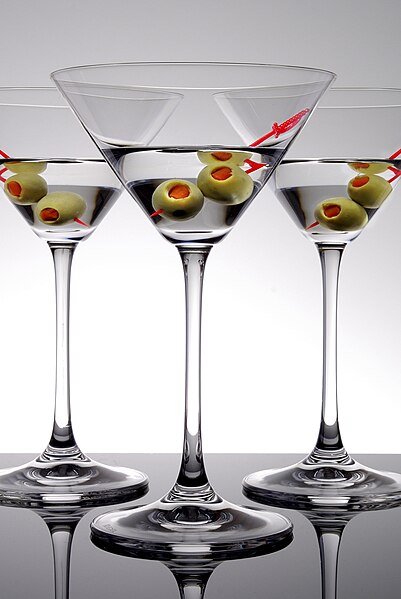
Why don't you try with some olive facts, next time you sit with an acquaintance of yours, sipping a martini, and looking at that olive floating around, thinking about starting a weather conversation?


Like:

-  that olive oil is the only oil obtained from a fruit?

- that it is the only oil that can be obtained just by pressing the fruits, without need for any refinining?

- that its trade was regulated at least since Babylonian times, i.e. 5000 years ago (Hammurabi's Code bearing the first references)?

I have many more, if we ever meet for a martini, I'll share them in person...

P.S. Speaking of martinis, drink responsibly! (Sorry J, I'll make it up to you next time)

Saturday, 8 December 2012

White olives?

Everybody heard about green and black olives, but what about the white ones?

Due to the content of my last post I can not honestly say that what I saw this morning surprised me, but it's still an unusual view:


Well, Insha'Allah, hopefully there wont be too many broken/frozen branches. Will take a walk tomorrow and see.


Thursday, 6 December 2012

Weather forecasts...

If you live in a city and it's not a weekend, the weather has not a huge influence on your life. Of course, extreme events apart like floods, snowstorms or similar. But if you are on sea, be it leisurely sailing with your family and friends or shipping several thousands tonnes of crude or iron ore, it's another matter altogether.

Hokusai's take on rough weather
 Having a bit of sea experience myself, I have learned to keep a careful eye on the weather patterns and developements, so to plan and organize the life at sea in accordance with nature swinging moods.

A nice high pressure area and you can have a good quiet sleep at anchor!

But how does this translate to works in olive orchards? Here is a fresh example that is puzzling me at this very moment.

There's an approaching low pressure peeking which will most probably lead to rain and temperature drop over the weekend. Now, the temperature drop does not worry us if it is keeping itself at or about 0 degrees celsius, but it may be troublesome for the young olives if much lower, as the branches are still growing. The possible damage we are looking at is freezing of the branches - at least one year of growth lost - or even whole trees freezing and dying. There are biological solutions that can be sprayed on the leaves to prepare them for the shock and minimize the damage, but as with all biological therapies the timing is paramount.

 Google being our friend, a quick look at some serious weather forecast pages gave the following results:

FORECAST 1

FORECAST 2

FORECAST 3


As you can see, it is not even clear if it wil rain (or snow) Friday OR Saturday (we really can't spray anything whilst it rains...), let alone IF the temperature drop will be under 0, and if so when...

If only the Oracle of Delphi was still in business!


Monday, 3 December 2012

Oil trading, arbitrage and options...in ancient Greece

Here is a little piece of useless olive oil related info useable during a rainy day winter chat. Having a penchant for economics myself, lately I stumbled into an article about economy theories. There was a reference to Thales of Miletus - if at school you listened to your math teacher, this was the guy who measured the pyramids height with a stick on a sunny day. A practical, clever person one would imagine.


In this days of general malcontent with anything related to the financial world and their instruments, it is interesting to observe that similar techniques were employed in the early days of our civilization. As a necessary intro, it is worth mentioning that at the time olive oil had the same (if not larger) economic importance that crude oil has now for our society.

Thales, the story goes, predicted a generous olive harvest for the next season and negotiated a deal with the region's mills whereas he'd have a right to use the mills for a fixed sum. Harvest time come, Thales excercised his option and, if we trust the old story, made himself quite a fortune on the delta.

I bet his philosophy classes had a surge in attendances when the news spread out...

Monday, 19 November 2012

Cold wind blues

She's cold, she's strong, and she's coming from the northeast. Some say she was born in the vastness of Siberia, and judging by her fierce gusts and biting coldness, it may as well be. It is the bora, the menace of our windrose.


The coldness, if she endures for more weeks, can freeze quite old trees, let alone the young ones. The gusts can take their toll on branches, and even eradicate trees. We had the first preview few days ago, and a torough check of the young tress and their supporting poles had to be done.


So far so good, a lotta shaking going on but no damage. Some tying up to be done here and there, but mostly small issues.

Since pictures in this case may not be descriptive enough, here are two short videos made during the control walk:


Good fun for sailing, not so much in the orchard!

Monday, 12 November 2012

The olive autumn

As one would expect, autumn brings a certain slowdown to the activities in the orchard, however not of the magnitude that would ensure a boring time to yours truly. The plants are still growing and pruning is still on the to do list, and there is a number of other things that need to be taken care of. Therefore I am quite neglecting to update you in the last few days, but here is part of what I promise to give you in the forthcoming days and weeks:

- an insight on the wind influence on the young plants

- a report on our latest try to minimize the negative influence of the insects I've been speaking about here

- some statistics and a field report on another enemy of ours

- last but not least, a preview of our logo, bottle, and label(s)!

Stay tuned!


Wednesday, 3 October 2012

Harvest time approaching

In between the frequent rainshowers that are passing by with the regularity of the Heathrow Express, exept for the standard checks of familiar flora&fauna inhabitantas of the orchards, a new topic is more and more becoming subject of our attention. Harvest season is approaching fast and we need to keep track of the olives starting to ripe, in order to pick the exact time for harvest*. As with probably every other thing, one should not be too quick to act or delay too much the decision to pick the olives.  The earlier cultivars (i.e., the ones that tend to ripe sooner) started to change colour. Since this year's harvest will be quite meagre, there's no chance of picking each cultivar separately and producing monocultivar olive oil - it will have to be a cuvee. Not that it's a bad thing per se, will just have to time the harvest a bit more precisely.

Here are some of the leccino fruits already starting to change colour:


 Here is another grouping of leccino cultivar, with one olive (yes, the one a bit out of focus at 7 o' clock...) just about to start its dress change:


It is a matter of days now. Will keep you updated.

*That's a specific topic altogether, an is subject of a fervent, almost religious discussion, by followers of different schools. As almost always the old latin "in medias res" is true, probably there's a middle way in this topic too. Will elaborate in detail soon.

Friday, 15 June 2012

The wild olive trees of Sardinia

Back from one trip, and ready for another one (it's travelling June this year), I wanted to share some insights I missed during my previous visit of Sardinia.

 Should you ever decide to visit this still wild gem of the Mediterranean, try for a few moments to skip the beautiful beaches and head for some less populated and known spots - the island is willing to show so many different facets to the traveller with the time and will to see, grab and observe them.

As my personal penchant and theme of this blog are the olive tree and its fruit, it doesn't take a wild guess to know what continuously grabbed my attention: along winding roads, on top of mountains as well as along beaches and coves, the wild olive is the quiet and understated background of any Sardinia's sight. The beaches may glow with their turquoise colours or the sanguine rocks impress you with their weird shapes, but there will always be the silver reflection of the olive leaves somewhere in the background. It's like the double bass in a jazz band...

 As it has been said that a picture is worth a million words, I'll stop here and let you see what it's all about: