Since in my previous posts I shared some pics of the first olive flowers, it would not be fair at all if I did not share also some of the beatiful wild flowers that are still showing up in the fields. I am a bit disappointed I did not manage to shoot some of the most interesting orchids (their flowers can be seen until mid May)...
Tuesday, 29 May 2012


Monday, 28 May 2012
Bugs, spiders & some acrobatical exhibitionism by a couple of ladybirds...
Whilst taking some shots of the young olive flowers, I grabbed the opportunity of portraying some of the animal population of the growth. Observing them, Aesop's and LaFontaine's stories were the first associations that came to my mind - it's so easy to see some human characteristics if you look close enough:
 |
| The good samaritan - someone should tell him that the olive flower does not need insects for the purpose of impollination... |
 |
| They might not join the mile high club, but the effort is worth a plause |
 |
| As the above couple, these two like to be on the verge |
 |
| The thief - hiding in the shade during the day, eating the young olive leaves during the night |
 |
| What looks to be the king of the hill - I noticed that on 99% of the young trees (the older are much more diffcult to check) there's a spider sitting on the top branch. Kind of bossy, but if I'd be of the same size, I would not like to enter into a discussion... |
Olive flowers - finally!


Friday, 25 May 2012
Weekend olive links
As it happens, having some useless facts up in one's sleeve can sometimes come in really handy. Given the nature of this blog, the topic of said useless facts will of course be olive oil.
I suppose a general read from the most beloved fast-food of facts should be a good place to start: Olives article on Wikipedia
I also happen to be a mythology junkie, so I suggest you take a look at this myth about the olive tree (there's also an audio file for the really lazy)
And, I guess this should be appropriate, what is exactly extra virgin olive oil? (maybe not that useless...)
+++
For the less inclined to chemistry and long explanations, the extra vergine is obtained by cold pressing freshly picked olives. That's it.
The free fatty acids number (which should be below 0,8%) is basically an indicator of how much care was taken for the fruit and its transformation into oil. The other marker in use, the peroxide number, tells you how "rusty" the fats are. Here too, the lower the number, the better the oil. A broader explanation on olive oil chemistry here.
+++
Or, if the weather serves you well, you may rather want to go out and enjoy yourselves and keep those links for a boring rainy/working day.

Wednesday, 23 May 2012
Organic agriculture midweek rant
Getting ready for the next insect I know will start to attack our young olive trees in the next few weeks, whose eating habits do more damage than the one depicted some posts below (it's called Margaronia Unionalis, more on the subject later...), I made some phonecalls to see which ecological substances are available in the shops at hand. Two thirds of them store no organic substances. Several store one which is not very specific - meaning it will affect the population of useful insects too.
Just one has available the product I'd like to use - it specifically targets leaves-eating larvas. Good, I'm going to buy some to be ready for the first attack.
So, where's the rant? I was mildly upset by one agronomist trying to sell me the product affecting a wider range of insects explaining me that I should buy it because a well known local olive grower uses it, who happens to have converted its production to "organic". Okay, it's better than a chemical pesticide, but it's not the Rolls Royce of organic defence - this would not have stirred my inner calm that much if few days ago I hadn't visited the fields of another "organic" producer where I found no ants, spiders, ladybirds or whatsoever form of multicellular life. Let's not even speak of hearing a bird singing. Kind of strange for an organically treated field - mine looks like an insect zoo. I might be wrong, but I feel a certain lassez-faire attitude towards organic practice.
Anyway, I say to myself, let's try to do things right and stone by stone, hopefully build a quality wall against any suspicion.

Tuesday, 22 May 2012
Birthday competition&present! (sort of)
Being aware of the sparce following of this blog I can easily make the bold and generous step of offering a bottle of 2012 extra vergine (I know, it's short selling, but at least something you can look forward to!) to the person who can identify this lean looking insect found the other day on an olive plant:


Well, let's say the bottle will go to the best effort in identifying it...


Well, let's say the bottle will go to the best effort in identifying it...
Friday, 18 May 2012
Olive blossoms...almost!
I feel like a kid knowing the presents are ready and packed under the tree or hidden in the closet and awaiting the next day to be opened (you know the feeling, don't you?). Yesterday I've taken a stroll with my daughter in some of the fields to check how the insect attacks were developing (it seems we got to a temporary truce due to a temperature fall and a strong wind blowing for the last days) and after the due check, we focused on the almost blossoming olive flowers. Actually I did, my daughter was more focused on pulling weed (go guess) and playing with the poppies that right now are all over the place painting numerous red patches here and there.
I am happy the numbers of cadenelas is quite substantial, and hope the weather will be gentle during the period of impollination. Anyway, here you go with some pics of the soon-to-be olive flowers:


And since the light was so nice, we snapped some pics of the adjacent 9th century church of St.Lucy. I did not manage to take them from some nicer angles as my daughter was adamant to continue our bike ride (easy for her just sitting in the back!):


I'll leave you for today with the looks of one of the young growths, now ship shape and Bristol fashion:


I am happy the numbers of cadenelas is quite substantial, and hope the weather will be gentle during the period of impollination. Anyway, here you go with some pics of the soon-to-be olive flowers:


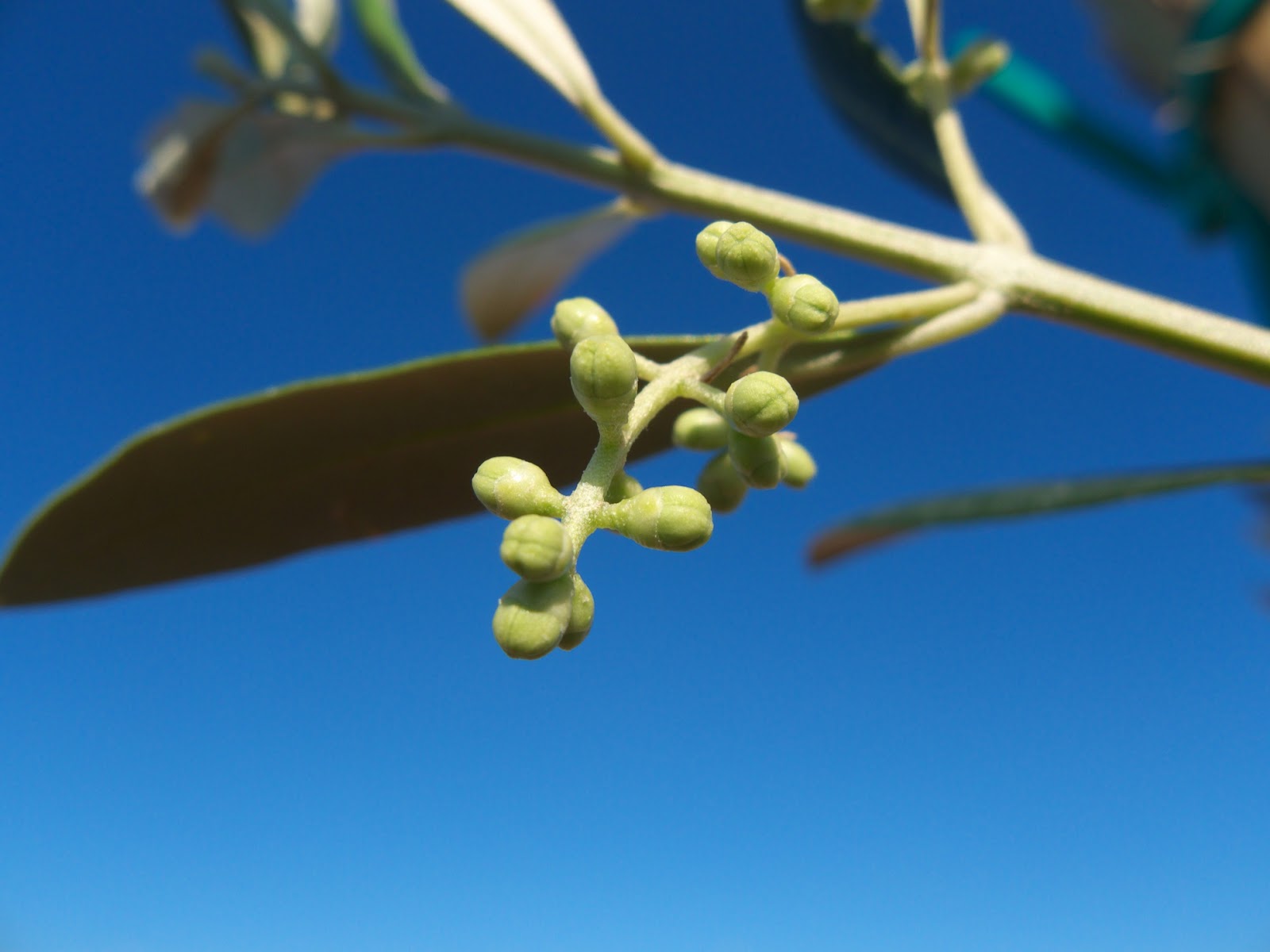
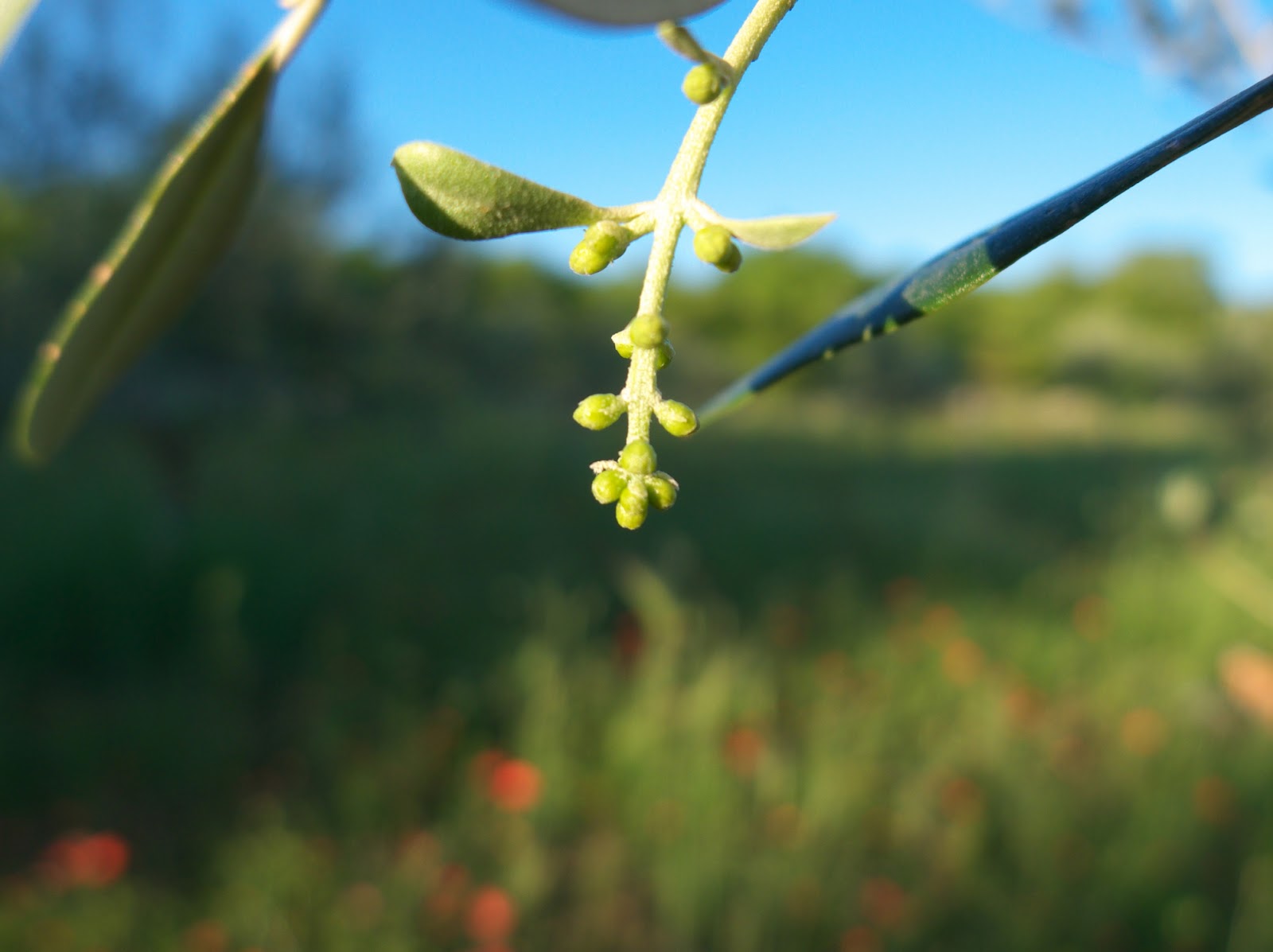
And since the light was so nice, we snapped some pics of the adjacent 9th century church of St.Lucy. I did not manage to take them from some nicer angles as my daughter was adamant to continue our bike ride (easy for her just sitting in the back!):


I'll leave you for today with the looks of one of the young growths, now ship shape and Bristol fashion:


Subscribe to:
Posts (Atom)