Actually, just one of the busa varieties: the busa femmina di Dignano, or female busa. Big, rounded and meaty, this olive variety is native from our very town of Dignano.
Her tree is like the oil she produces: benign, not much wild, and somewhat delicate. Anyway, I think it may be better to leave aside the agricultural details and pass on to what you might find more interesting: her oil.
It does not exceed in bitterness, spiciness or flavors, nor does it have an electric green colour like some of its peers, but is a perfect match for any kind of delicate dishes. It does not impone itself on the tastes, but rather accompany them and enhance them in a diminutive, understated way. In few words, if you need the double bass of the olive oils, with the busa you can't go wrong!
Tuesday, 20 October 2015
Friday, 22 May 2015
Your olive tree, bespoke!
Here at Cadenela, we care for every single olive tree, and we have the evidence to prove it!
Take a look at the short video we made for one of our friends during pruning time:
Join us for more updates!
Take a look at the short video we made for one of our friends during pruning time:
Join us for more updates!
Saturday, 11 April 2015
Olives need a haircut too!
Been missing us? Sorry but at the moment we're in "all hands on deck mode" as it's pruning season! Take a look at the short video we made (actually worth one hour of pruning) to get an idea of how's life in Cadenela orchards right now...
Pruning is probably the most labour intensive activity (or at least on harvest level) and is necessary to have a healthy and productive orchard. Oh, and the trees look better after a haircut too :-)
Thursday, 29 January 2015
Art, kids & Cadenela olive oil
One may find the combination of art and agriculture somewhat strange, but food has always found its place in art, either on canvas or in other unedible forms. Remember highschool art lessons, and renaissance's Giuseppe Arcimboldo?
There are many more, both contemporary and distant in time that have found inspiration in food, one way or the other. Now, you may wonder why this introduction in our, mostly down-to-earth (quite literally) blog: because the olive tree, and its oil, inspires us. It takes one back to basic beauty, to natural harmony, to higher connections the olive oil has always bridged for humans.
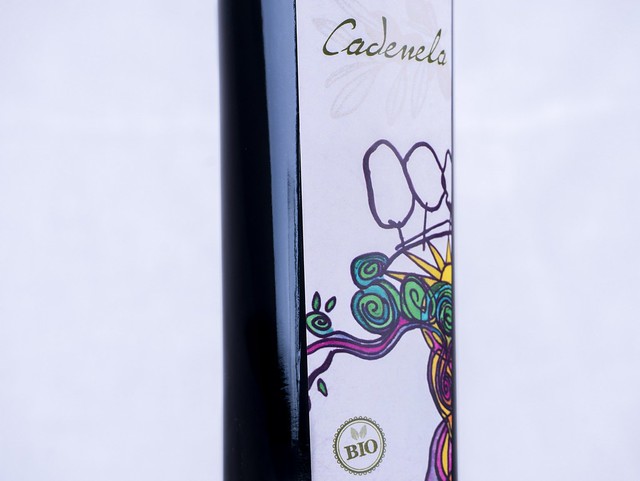
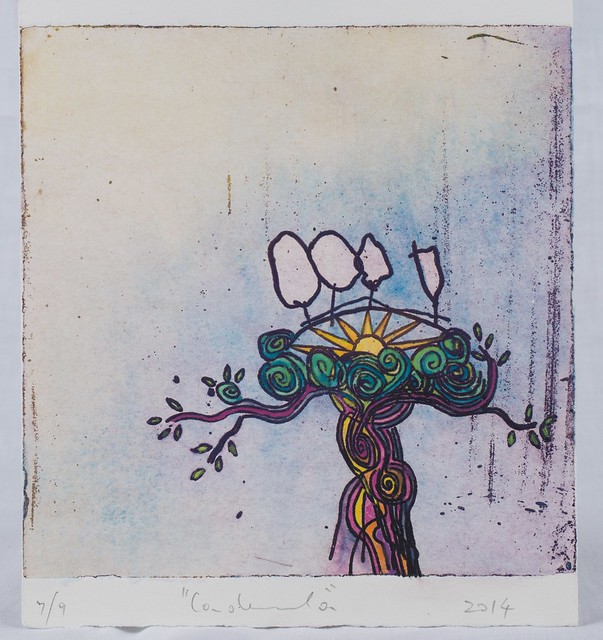
Enter Valter Černeka and his art. Primarily a sculptor, but otherwise an artist tout court, Valter pursues an impressive range of activities, not last working with children and developing the innate creativity of our younger ones. Since we both share a penchant for the olive tree, it came quite natural to embark on a project we are now proud to present you: the Cadenela organic olive oil, especially for our kids.

For kids you may ask? Yes, since the quest for high quality olive oil often leaves the youngest a bit wanting, due to the bitterness and spicy tastes we tend to associate with such products. Obviously with time kids begin to appreciate those qualities, but why not produce a top olive oil, just milder, and present it properly to them? That was the idea we developed and which has been visually translated, with the invaluable input and start idea by our 5 year old daughter Elena :-).

A limited batch of 100 bottles has been made this year, so hurry up and check here whether you can still grab one for your little ones!
Here's a slideshow of some details of Valter's and our work:
Enter Valter Černeka and his art. Primarily a sculptor, but otherwise an artist tout court, Valter pursues an impressive range of activities, not last working with children and developing the innate creativity of our younger ones. Since we both share a penchant for the olive tree, it came quite natural to embark on a project we are now proud to present you: the Cadenela organic olive oil, especially for our kids.

For kids you may ask? Yes, since the quest for high quality olive oil often leaves the youngest a bit wanting, due to the bitterness and spicy tastes we tend to associate with such products. Obviously with time kids begin to appreciate those qualities, but why not produce a top olive oil, just milder, and present it properly to them? That was the idea we developed and which has been visually translated, with the invaluable input and start idea by our 5 year old daughter Elena :-).

A limited batch of 100 bottles has been made this year, so hurry up and check here whether you can still grab one for your little ones!
Here's a slideshow of some details of Valter's and our work:
Thursday, 25 December 2014
Happy 2015!
Dear friends, another year is just around the corner and we're leaving 2014 behind, with all its good and bad events (detailed report coming soon!). We wish you all peace and health!
Monday, 16 June 2014
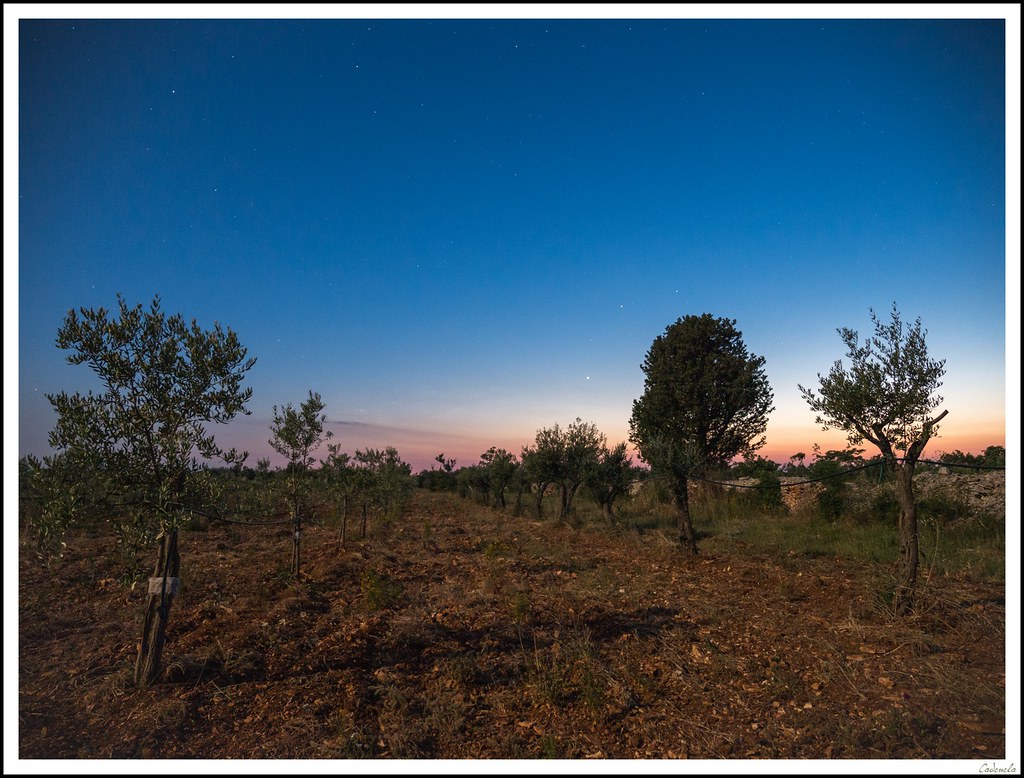
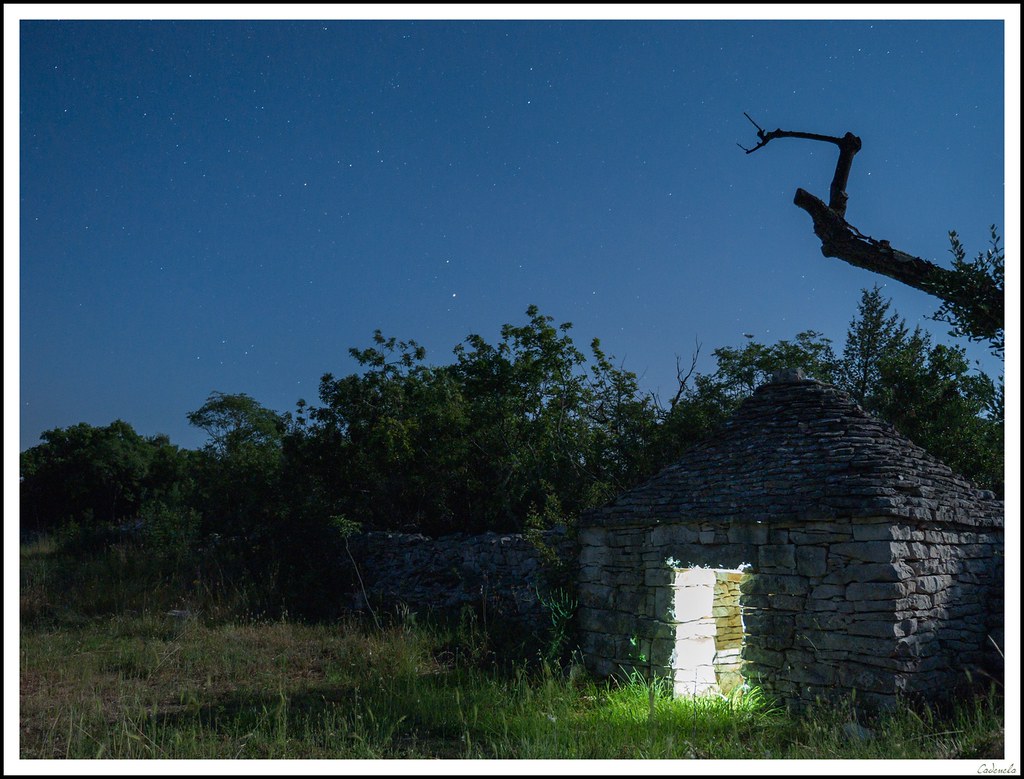
Olive orchards in the moonlight
Summer's here, and in full swing too. Since it was a full moon few days ago, I decided to take a late evening stroll in the orchards (it's quite warm already here in Istria!).
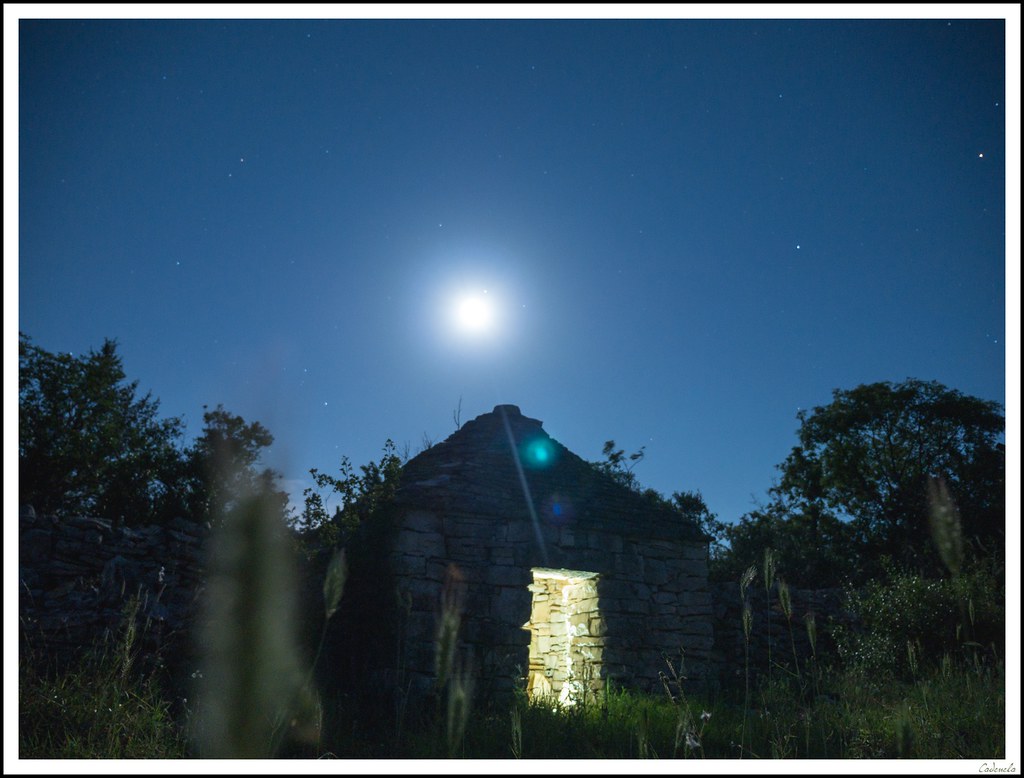
Passing from one orchard to the other, I was thinking about the people who used to work them in the past days, and how were the nights they would spend in the casitas (or kažuni) when late work, or bad weather, kept them in the fields overnight. A small digression here - the casita is a small stone building, usually integrated in the stone walls surrounding the fields of southern Istria (mainly). I suppose there are thousands of them in the area, as almost each field had one...
So, I tried to recreate a semblance of life in them, and these are some preliminary results:
I like to think that the olives enjoy some human company, and who knows, maybe the fields, and the stones themseves do too?
It was a nice stroll anyway, and I almost forgot, our olives are working hard on your next oil!
![]() |
| Dusk in the olive grove near Dignano (Vodnjan) |
Passing from one orchard to the other, I was thinking about the people who used to work them in the past days, and how were the nights they would spend in the casitas (or kažuni) when late work, or bad weather, kept them in the fields overnight. A small digression here - the casita is a small stone building, usually integrated in the stone walls surrounding the fields of southern Istria (mainly). I suppose there are thousands of them in the area, as almost each field had one...
So, I tried to recreate a semblance of life in them, and these are some preliminary results:
| |||||||||||
| A casita close to Peroj, in the moonlight |
| |||||||
| Did it look like this, two hundred years ago? |
Monday, 5 May 2014
Wednesday, 16 April 2014
Pedal to the metal!
I think this was the longest absence of updates on this blog since it's inception - nature's decision to provide us with a rainy winter and a sudden start of spring, I'm talking to you...
Well, it's quite a busy period for us, having the backlog of late winter work to be cleared off the list (now done!) and all the usual spring duties compressed in half the usual time. We're keeping up, thanks for asking, and soon the tempo should be easier on us, and allow for some more regular reporting!
For those who may wonder what kept yours truly occupied, here's a little video (it's an hour of work compressed in few seconds)
To get a feel of the size of activities, just press play a few hundred times :-)
Well, it's quite a busy period for us, having the backlog of late winter work to be cleared off the list (now done!) and all the usual spring duties compressed in half the usual time. We're keeping up, thanks for asking, and soon the tempo should be easier on us, and allow for some more regular reporting!
For those who may wonder what kept yours truly occupied, here's a little video (it's an hour of work compressed in few seconds)
To get a feel of the size of activities, just press play a few hundred times :-)
Wednesday, 22 January 2014
Gold for Cadenela, or otherwise said - ladies and gentlemen, start your engines!
I thought about grouping all the results on various competitions in one single post, but my ego is recalcitrant to keep silent and quiet, hence - we've already won a gold medal, and got again listed in Monocultivar olive oil guide by Mr.Celletti!
Ok, for now this is it but we have more coming in the spring (of course I will not manage to keep quiet and let you know in no time).
Before I leave you, here's a screenshot of the chemical analysis of this year's oil - quite good given the annus horribilis we've endured.
All this is good and nice, you may say, but how does it taste? In comparison with the muted tastes of many Istrian oils of this 2013 harvest, the pungency is quite present, with low levels of bitterness, and mild grassy/fruity aromas. But forget words, come and try it by yourself!
Ok, for now this is it but we have more coming in the spring (of course I will not manage to keep quiet and let you know in no time).
Before I leave you, here's a screenshot of the chemical analysis of this year's oil - quite good given the annus horribilis we've endured.
All this is good and nice, you may say, but how does it taste? In comparison with the muted tastes of many Istrian oils of this 2013 harvest, the pungency is quite present, with low levels of bitterness, and mild grassy/fruity aromas. But forget words, come and try it by yourself!
Wednesday, 15 January 2014
The nature of time
In this unusally mild and rainy winter, dotted by the seldom spots of sun, I went for a leisurely check in the orchards. Winter is usually nature's time-off and does give us the time for a recap of the passed year, to draw plans for the next, and to enjoy the fruits of last year's work. I say usually as this year we have not tasted winter yet, and the orchards do require some attention when the gods of the seasons play tricks on us.
One is never really alone on such walks - all the inhabitants, if quieted by the sudden appearance of humans, swiftly reappear as if they knew it's not a hunter wandering around, but rather the keeper of their land. The odd rabbit jumping around, the buzzard looking down from the tallest tree of the nearby wood, and all the range of small birds singing from their hidings.
This time a small, uncommon difference followed me through my walk in the younger yards - the singing was much closer, coming from within the orchard, very close. I started paying attention and noticed the sparrows were hiding in the foliage of the young trees, and there it struck me. Our plants, little more than a dozen or two of leaves two years ago, are now big enough for birds to deem them a safe haven! An emotional moment, I confess. And another reminder of time passing, not just as something lost, but of new opportunities found.
Wish you all a year full of discoveries!
One is never really alone on such walks - all the inhabitants, if quieted by the sudden appearance of humans, swiftly reappear as if they knew it's not a hunter wandering around, but rather the keeper of their land. The odd rabbit jumping around, the buzzard looking down from the tallest tree of the nearby wood, and all the range of small birds singing from their hidings.
This time a small, uncommon difference followed me through my walk in the younger yards - the singing was much closer, coming from within the orchard, very close. I started paying attention and noticed the sparrows were hiding in the foliage of the young trees, and there it struck me. Our plants, little more than a dozen or two of leaves two years ago, are now big enough for birds to deem them a safe haven! An emotional moment, I confess. And another reminder of time passing, not just as something lost, but of new opportunities found.
Wish you all a year full of discoveries!
![]() |
| A sparrow, out of the safe comfort of our olives |
Tuesday, 24 December 2013
Sunday, 6 October 2013
Harvest time has come!
I'm writing while it's raining outside - and it is has been so for days already. Those who know say it'll last for a few days more, but it should end by mid week. Not really interesting, is it? But it's a quite important bit of info as I've been (nervously, I have to admit) checking the olives for the last weeks, and we're ready to go! So, harvest time has come, and if you'd like to join us in fileds or at the mill, do let me know, as next weekend we'll start picking!
Labels:
olive facts,
olive oil
Monday, 30 September 2013
A forgotten tale
Past lives and stories have always had a special charme to me. An old letter, a path in the fields covered by growth, a roman ruin. If one looks hard enough, it is too easy to notice all the signs of days gone by, of hard work and dreams.
Sometimes they are exposed, standing so clear to remain unnoticed, obvious, and sometimes remain veiled and ask for a second look, and a second tought. In this angle of the Mediterranean, where hands have shaped, reshaped, covered and unearthed many layers, the shifts to city life of the past decades has allowed the nature to regain control of landscapes long held by man. I'd like to take you to such a place.
On our usual summer sailing route there's a well protected bay we like to stay - clear water, not much crowded, with a nice restaurant a short walk through the woods.
There's an almost hidden path that takes you from a small pier at the end of the bay to the restaurant - at first glance one does not take notice of it, as the eyes get slowly accustomed to the dim light filtering down the pine tree woods.
Walking through the quite thick undergrowth, something familiar but not easily definable starts to intrigue me - there's something in this forest that does not fit. Step after step, it suddently becomes clear: we're walking through an olive orchard! In between the slender pines and cypresses, the contorted grey olive logs now show themselves to my eyes, concious of the double nature of their surroundings.
The walk now takes a completely new dimension, and becomes a walk through time - what is now a thick pine forest, in days gone by used to glow of the silvery green nuances of the olive leave.
Grey, fossilized like old bones, the reminders of a different landscape and of the people that created it, the olives accompany you on a summer's eve walk, like roman milestones indifferent to their forgotten purpose.
Then, if you did not wonder off the beaten path, you may see this signal
which quickly reminds you of the reason you took that walk altogether - and believe me, it won't disappoint you - if you're into grilled fish or lamb. It's a bit rustic and unrefined, but with a lot of soul.
Sometimes they are exposed, standing so clear to remain unnoticed, obvious, and sometimes remain veiled and ask for a second look, and a second tought. In this angle of the Mediterranean, where hands have shaped, reshaped, covered and unearthed many layers, the shifts to city life of the past decades has allowed the nature to regain control of landscapes long held by man. I'd like to take you to such a place.
On our usual summer sailing route there's a well protected bay we like to stay - clear water, not much crowded, with a nice restaurant a short walk through the woods.
There's an almost hidden path that takes you from a small pier at the end of the bay to the restaurant - at first glance one does not take notice of it, as the eyes get slowly accustomed to the dim light filtering down the pine tree woods.
Walking through the quite thick undergrowth, something familiar but not easily definable starts to intrigue me - there's something in this forest that does not fit. Step after step, it suddently becomes clear: we're walking through an olive orchard! In between the slender pines and cypresses, the contorted grey olive logs now show themselves to my eyes, concious of the double nature of their surroundings.
The walk now takes a completely new dimension, and becomes a walk through time - what is now a thick pine forest, in days gone by used to glow of the silvery green nuances of the olive leave.
Grey, fossilized like old bones, the reminders of a different landscape and of the people that created it, the olives accompany you on a summer's eve walk, like roman milestones indifferent to their forgotten purpose.
Then, if you did not wonder off the beaten path, you may see this signal
which quickly reminds you of the reason you took that walk altogether - and believe me, it won't disappoint you - if you're into grilled fish or lamb. It's a bit rustic and unrefined, but with a lot of soul.
Labels:
olive facts,
olives,
restaurants
Thursday, 18 July 2013
The needle and the damage done
This little insect is becoming the main summer blues down here in Istria, and more often than not in the last days, Neil Young's song from which I shamelessly stolen the title for this post, is coming to my mind. The little bug is piercing a huge number of small olives, and as the situation is standing at the moment we are looking at a 50%+ loss of harvest.
Not a good outlook, especially as the instruments available to limit the damage are almost non-existent. But, as in any other field, any event brings lessons to be learned and has some positive, although minor, sides.
Some of the olives managed to survive, and are becoming "too big to fail" as the pierces now are just becoming an aesthetic issue, rather than life-or-death.
On another side, we came to know and understand this problem before full production and whilst the majority of trees are still very young, which will lead to proper preparation for next year and to a bigger growth of the trees this year, since they do not have to feed all those olives (hopefully meaning more olives next year!).
And all that happening before the olive fly even beginning its offensive...Which may give you an idea why organic is sometimes more expensive than "normally" grown food!
Still, working hard as there's less than 100 days to harvest. Looking forward to the dawn of that day!
| A fistful of damage |
Not a good outlook, especially as the instruments available to limit the damage are almost non-existent. But, as in any other field, any event brings lessons to be learned and has some positive, although minor, sides.
| Something is still hanging on! |
Some of the olives managed to survive, and are becoming "too big to fail" as the pierces now are just becoming an aesthetic issue, rather than life-or-death.
| Another one (or two) bites the dust |
On another side, we came to know and understand this problem before full production and whilst the majority of trees are still very young, which will lead to proper preparation for next year and to a bigger growth of the trees this year, since they do not have to feed all those olives (hopefully meaning more olives next year!).
| Bue sky within |
And all that happening before the olive fly even beginning its offensive...Which may give you an idea why organic is sometimes more expensive than "normally" grown food!
Still, working hard as there's less than 100 days to harvest. Looking forward to the dawn of that day!
Labels:
biodiversity,
insects,
organic farming
Tuesday, 2 July 2013
Olive fruits - the missing, the missed, and the survivors (an early overview)
It's still quite early for a proper assessment of where this year will bring us, but few weeks after the flowers left place for the olive fruits we can give you some bits and pieces about where we're standing - we'll still have to wait for the end of the summer for any conclusions!
The leccino (which gives a quite balanced, gentle oil) has been a bit of a misfirer - lots of flowers but not that generous in fruits, maybe because the pendolino (another variety that is supposed to pollinate it) almost completely forgot to blossom. Here's how a branch of leccino is looking now:
Of the other varieties, the bianchera (which in contrast to the leccino, gives a peppery, spicy oil) is handling quite well. You can see from the below picture that the branches are well populated (the tiny dots close to the leaves!):
Some of you may remember my earlier post on pests (excuse the pun) which sits just below this one: anyway, here's the link for the lazy. It turned out the little bug is causing problems: we released our team of specialists to chech the population:
And we found quite a number of those insects on our trees, which prompted us to spray some repellent on the trees. Here you can see what a catch looks like:
One is never happy to see them around in numbers, as in few days they decimate the still small fruits by piercing them to feed and breed (here's a picture of a sliced olive, few millimetres in diameter):
What happens afterwards is that the young fruit, fatally wounded, dies - too early, too young. I'd rather see their glorious end by being poured, as oil, on a steak, rather than see them fall by the beak?mouth? of a small brown insect!
Anyway, we're doing our best to bring you a fantastic oil this year too, and the path to harvest is still long ...
The leccino (which gives a quite balanced, gentle oil) has been a bit of a misfirer - lots of flowers but not that generous in fruits, maybe because the pendolino (another variety that is supposed to pollinate it) almost completely forgot to blossom. Here's how a branch of leccino is looking now:
![]() |
| Not really crowded! |
Of the other varieties, the bianchera (which in contrast to the leccino, gives a peppery, spicy oil) is handling quite well. You can see from the below picture that the branches are well populated (the tiny dots close to the leaves!):
![]() |
| Probably a serious discussion going on... |
Some of you may remember my earlier post on pests (excuse the pun) which sits just below this one: anyway, here's the link for the lazy. It turned out the little bug is causing problems: we released our team of specialists to chech the population:
![]() |
| Note the special net used by the young assistant! |
And we found quite a number of those insects on our trees, which prompted us to spray some repellent on the trees. Here you can see what a catch looks like:
![]() |
| The insects are marked in red - the others are their victims |
One is never happy to see them around in numbers, as in few days they decimate the still small fruits by piercing them to feed and breed (here's a picture of a sliced olive, few millimetres in diameter):
![]() |
| Piercing |
What happens afterwards is that the young fruit, fatally wounded, dies - too early, too young. I'd rather see their glorious end by being poured, as oil, on a steak, rather than see them fall by the beak?mouth? of a small brown insect!
![]() |
Anyway, we're doing our best to bring you a fantastic oil this year too, and the path to harvest is still long ...
Tuesday, 18 June 2013
Public enemy No.1
Well, not by general ranking, it's just the first to make its appearance this year! Still not a significant threat, but we'll be keeping an eye on those guys.
Whilst it does not look like much, this little insect (rhynchites cribripennis for his friends) can wipe out a good part of a year's production within the end of July, thanks to its nail-like shaped beak (mouth?) - which can be better seen in this picture:
More on its activities (or hopefully not!) in few weeks, when the olives grow to about black pepper seed size.
| Enjoying the view... |
Whilst it does not look like much, this little insect (rhynchites cribripennis for his friends) can wipe out a good part of a year's production within the end of July, thanks to its nail-like shaped beak (mouth?) - which can be better seen in this picture:
| Lookin' at me? |
More on its activities (or hopefully not!) in few weeks, when the olives grow to about black pepper seed size.
Labels:
biodiversity,
insects,
organic farming
Tuesday, 11 June 2013
Habemus logo! And other news
As the regular readers of this blog may have noticed, Cadenela got a refreshed look and a new logo! We're still working on a completely new dress but could not resist in sharing a bit of our new looks... To be honest, I could not resist and had to show it off even in the orchards - at least the olives are now properly introduced to the (most probably lost) mountain bikers that wander in the area!
But hey, we did not stop there - we're on the way to have the first labelled bottles travel to their new homes and tables! It's quite a small batch so if you're interested do let us know and become one of the first to taste our multi-golden-medal-organic EVOO. It might sound complicated, but it's actually just a very good olive oil (with a lot of artichoke and green pepper tastes developing lately) that gives its best on food with some character (red meat, cheese, prosciutto...). But your mileage may vary, as my daughter likes it best raw, on a slice of bread...
To sum it up,we're quite proud of the work we've done with Katja, and if you have to work on your visual identity we can only recommend her for the effort put in our project! Take a look here , you got all the necessary details to contact her.
Otherwise, we've got a lot of work out there, as the constant rain makes our orchards look more like the Serengeti during the rainy season than anything else - this year is an explosion of every single shade of green one could think of, beautiful to the eye but quite tiresome to the other body parts...
Will be back soon!
![]() |
| Guess who's the boss out of the two? |
But hey, we did not stop there - we're on the way to have the first labelled bottles travel to their new homes and tables! It's quite a small batch so if you're interested do let us know and become one of the first to taste our multi-golden-medal-organic EVOO. It might sound complicated, but it's actually just a very good olive oil (with a lot of artichoke and green pepper tastes developing lately) that gives its best on food with some character (red meat, cheese, prosciutto...). But your mileage may vary, as my daughter likes it best raw, on a slice of bread...
To sum it up,we're quite proud of the work we've done with Katja, and if you have to work on your visual identity we can only recommend her for the effort put in our project! Take a look here , you got all the necessary details to contact her.
Otherwise, we've got a lot of work out there, as the constant rain makes our orchards look more like the Serengeti during the rainy season than anything else - this year is an explosion of every single shade of green one could think of, beautiful to the eye but quite tiresome to the other body parts...
![]() |
| Everywhere... |
Will be back soon!
Friday, 26 April 2013
Weekend links and pics
As per title, some news about studies on olive oil, a wonderful blog to dig in (google translate may be your friend if you don't speak italian), and some fresh pics from our orchards (not olive connected but I like 'em!)
Wish you a good weekend!
Labels:
insects,
olive facts,
olive oil
Monday, 22 April 2013
ONAOO oil tasting crash course
In addition to being host to our pruning course, ONAOO kindly saved the last day, otherwise lost to the rain, by organizing a quick olive oil tasting for us.
We got on Skype the ONAOO panel leader, Mr.Scoccia, to guide us through a swift voyage around the world in about fifteen monovarietal oils: from Sicily to Umbria, passing by Australia, Chile and the southern coasts of the Mediterranean.
We tasted so many different characters, even between the same variety (coming from two different continents though). One of the biggest surprises (for me at least) was tasting a monocultivar oil made of picual for the first time - that was a Proust moment! As the madeleine for the caracter of In search of the lost time, the picual brought back to my memories all that flat supermarket oils of days gone by (for me at least)...
Looking forward, getting a grip on tasting and blending is the next big step needed to elevate our products a step further, and I am quite certain about where a fair bit of knowledge lies. Imperia, see you soon!
![]() |
| That's how it started... |
We got on Skype the ONAOO panel leader, Mr.Scoccia, to guide us through a swift voyage around the world in about fifteen monovarietal oils: from Sicily to Umbria, passing by Australia, Chile and the southern coasts of the Mediterranean.
![]() |
| And here's how it ended! |
We tasted so many different characters, even between the same variety (coming from two different continents though). One of the biggest surprises (for me at least) was tasting a monocultivar oil made of picual for the first time - that was a Proust moment! As the madeleine for the caracter of In search of the lost time, the picual brought back to my memories all that flat supermarket oils of days gone by (for me at least)...
Looking forward, getting a grip on tasting and blending is the next big step needed to elevate our products a step further, and I am quite certain about where a fair bit of knowledge lies. Imperia, see you soon!
Olive pruning in Liguria - part two
Having dealt with the introductions in the previous post, I'll pass to the actual course experience.
Actually, I need to do some explanation first:
![]() |
| Look, it tells you where to cut! |
![]() |
| Really? |
Actually, I need to do some explanation first:
Labels:
olive facts,
olive pruning
Subscribe to:
Posts (Atom)